
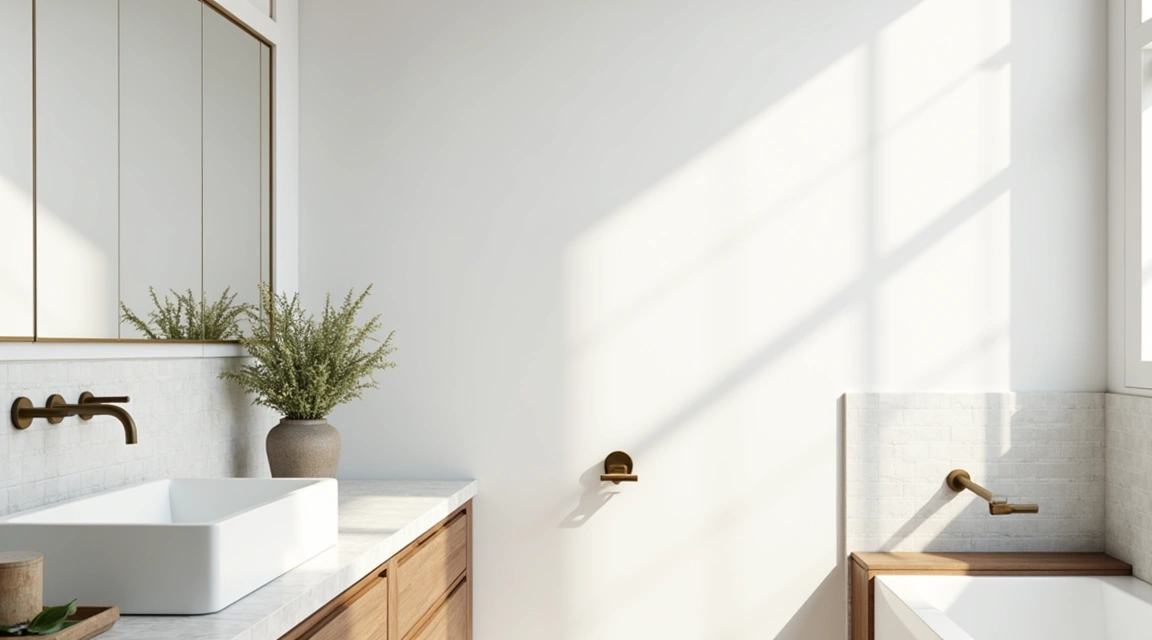
I’ve been through three bathroom remodels in the past decade, and each one taught me something valuable about keeping projects on track. The biggest lesson? Scope creep is real, and it can turn a simple refresh into a full-blown renovation that drains your budget and your patience. That awkward moment when you’re standing in a contractor’s office, looking at a quote that’s somehow doubled from your original estimate, is something I wouldn’t wish on anyone.
Scope creep happens when your project gradually expands beyond its original boundaries. You start by planning to replace a vanity and paint the walls, then suddenly you’re considering new flooring, relocating fixtures, and upgrading all the plumbing. Before you know it, your two-week refresh has become a two-month overhaul. The good news is that with proper planning and a solid checklist, you can keep your bathroom refresh focused, affordable, and stress-free.
This guide walks you through the practical steps I’ve learned to prevent scope creep, based on real-world experience and plenty of mistakes. Whether you’re updating a powder room or refreshing your primary bathroom, these strategies will help you stay on course.
Why Bathroom Refreshes Spiral Out of Control
Before diving into the checklist, it’s worth understanding why bathroom projects tend to expand. Unlike other rooms, bathrooms pack a lot of function into a small space. Every element is interconnected—plumbing, electrical, ventilation, waterproofing. When you start pulling at one thread, others often follow.
During my first bathroom refresh, I decided to replace the vanity. Simple enough, right? But the new vanity was slightly wider, which meant the old light fixture looked off-center. So we moved the light, which required patching the wall, which made the old paint look shabby, which led to repainting the entire room. One decision cascaded into five additional tasks.
The other factor is what I call “while we’re at it” syndrome. Once you’ve torn into a space and have workers on site, it’s tempting to add just one more thing. These additions feel minor in the moment but collectively blow up your timeline and budget. For more guidance on managing bathroom projects effectively, check out our Bathroom Remodeling section.
The Pre-Planning Checklist

The best time to prevent scope creep is before you start tearing anything out. Here’s what I do now at the very beginning of every project:
Define Your True Goal: Write down in one sentence what you want to achieve. For example, “Update the vanity and fixtures to create a more modern look” or “Improve lighting and ventilation.” This becomes your north star. Whenever someone suggests an addition, you can ask: does this support my primary goal?
Set a Firm Budget Range: Decide on both your ideal budget and your absolute maximum. Build in a 10-15% cushion for genuine surprises, but treat that cushion as emergency-only funds, not permission to add features. I write these numbers on a sticky note and put it somewhere visible during the project.
Inventory What Stays and What Goes: Walk through your bathroom with a notepad and mark every element as “keep,” “replace,” or “maybe.” Be honest about the “maybe” items—they’re where scope creep lives. I’ve found it helpful to photograph everything and annotate the photos digitally.
Identify Hidden Systems: If your refresh involves moving anything connected to plumbing or electrical, you’re not doing a refresh anymore—you’re doing a remodel. Moving a toilet, shower, or sink opens up a can of worms involving permits, code compliance, and structural changes. Keep fixtures in their existing locations whenever possible.
Research Realistic Timelines: Talk to contractors or research how long each task actually takes. When you understand that moving a light fixture isn’t a twenty-minute job, you’re less likely to add it casually to your scope.
The Active Project Checklist
Once work begins, your defenses against scope creep need to be even stronger. Here’s what keeps me disciplined during active projects:
Use the 48-Hour Rule: When anyone suggests adding something—whether it’s you, your partner, or your contractor—write it down but don’t decide immediately. Wait 48 hours. Most impulse additions seem less critical after two days. The ones that still feel essential probably are.
Track Every Change in Writing: Keep a simple log of any modifications to the original plan, including the reason and cost impact. This accountability helps you see patterns. I once caught myself trying to justify three separate “small” tile upgrades that collectively added $800 to my budget.
Establish a Decision Maker: If you’re working with a partner or family members, agree upfront on who has final say for different categories. Nothing invites scope creep like multiple people with veto power and different visions. In our house, I handle finishes and fixtures while my partner manages layout and function.
Schedule Regular Check-ins: Set aside fifteen minutes every few days to review progress against your original plan. It’s easy to lose perspective when you’re making daily micro-decisions. These check-ins help you zoom back out and ask whether you’re still on track.
Distinguish Between Fixing and Upgrading: If your contractor discovers rotted subflooring or faulty wiring, that’s a fix—you need to address it. But turning that repair into an opportunity to install heated floors or add recessed lighting? That’s an upgrade, and it should go through your decision-making process like any other addition.
Common Scope Creep Triggers and How to Handle Them
Through my experiences and conversations with others tackling bathroom projects, I’ve identified the most common ways refreshes expand beyond their original boundaries:
The Pinterest Effect: You’ve pinned hundreds of gorgeous bathrooms, and suddenly your modest update feels inadequate. Remember that staged photos often show full remodels with professional styling. Keep your inspiration folder, but revisit your original goal statement before making changes.
The Discontinued Product Problem: Your existing tile or fixture has been discontinued, and the closest match costs significantly more or requires additional modifications. This is real and frustrating. My solution is to plan for one or two items possibly being discontinued and budget accordingly, while being willing to switch to a similar style rather than matching exactly.
The “Since the Wall is Open” Temptation: Once you’ve opened a wall for one purpose, it’s tempting to run new wiring, add insulation, or relocate outlets. Some of these are genuinely smart moves, but others just extend your timeline. Distinguish between opportunities that solve existing problems and those that add features you never missed before.
The Contractor Upsell: Good contractors will point out opportunities for improvement. Some suggestions are valuable; others pad their invoice. Ask for each addition in writing with a separate line-item cost, and apply your 48-hour rule. I also find it helpful to ask: “If this were your home and you were on a budget, would you add this or skip it?”
The Incremental Upgrade Creep: You’re already getting a new vanity, so why not spend $150 more for the nicer one? And the premium faucet is only $80 more. These small bumps add up fast. Before any upgrade, calculate the cumulative impact of all your “only a little more” decisions.
What Works in Your Favor
Planning a bathroom refresh with scope creep awareness has several genuine advantages. First, you maintain control over your budget and timeline. Instead of being reactive to every suggestion or problem, you’re making intentional choices aligned with your priorities.
Second, you actually finish the project. I’ve seen too many friends whose bathrooms sat half-done for months because they kept adding tasks faster than they completed them. A completed modest refresh beats an abandoned ambitious remodel every time.
Third, you reduce decision fatigue. By setting clear boundaries upfront, you eliminate hundreds of potential decisions during the project. This leaves you with mental energy for the choices that truly matter.
Finally, you’re more likely to be satisfied with the result. When every element of your refresh serves your original purpose, the finished space feels coherent and intentional rather than like a collection of random upgrades.
The Honest Drawbacks
Being disciplined about scope comes with trade-offs. The most obvious is that you might miss genuine opportunities. Occasionally, a mid-project discovery really does present a chance to solve a problem efficiently. My strict adherence to the plan once meant I skipped adding a ventilation fan when the ceiling was already open—and I regretted it during the next humid summer.
This approach also requires saying no—to yourself, to your partner, to helpful contractors. That’s uncomfortable. You’ll see beautiful options you can’t choose and smart suggestions you’ll have to defer. It takes discipline to stay focused when you’re surrounded by possibilities.
Additionally, a scoped refresh means you might need another project later. If you replace the vanity now but leave the dated tile, you may be back in the bathroom with contractors sooner than you’d like. Sometimes a slightly larger project done once is more efficient than multiple small refreshes.
There’s also a risk of being too rigid. Not all scope expansion is bad. The key is distinguishing between worthwhile additions and expensive distractions, which isn’t always clear in the moment.
Who This Approach Fits Best
This checklist-driven, scope-conscious approach works especially well if you’re budget-constrained, timeline-sensitive, or both. If you have a firm number you can’t exceed or need your bathroom functional again by a specific date, these strategies are essential.
It’s also valuable for anyone doing their first bathroom project. When you lack experience estimating costs and timelines, it’s easy to underestimate how quickly changes accumulate. This framework provides structure when your instincts aren’t yet developed.
People who struggle with decision-making or perfectionism also benefit. If you tend to second-guess choices or always wonder if there’s a better option, having clear rules reduces that mental loop. You’re not debating every possibility—you’re following your predetermined plan.
On the other hand, if you have a generous budget and flexible timeline, and your primary goal is creating your dream bathroom regardless of cost, this approach might feel restrictive. In that case, you might prefer a more exploratory process where you pursue ideas as they emerge. Just know that even unlimited budgets benefit from some guardrails—I’ve watched wealthy friends spend far more than necessary simply because they lacked a framework for decision-making.
Frequently Asked Questions
How do I distinguish between necessary fixes and optional upgrades when problems are discovered mid-project?
Ask your contractor what happens if you don’t address the issue. If the answer involves water damage, safety hazards, code violations, or structural deterioration, it’s necessary. If the answer is “it would just be nicer” or “while we’re in there,” it’s optional. Get all fixes documented with photos if possible, and if you’re uncertain, consider getting a second opinion from an inspector or another contractor. I learned to be more skeptical after a contractor insisted I “needed” to upgrade to premium cement board when the standard product was perfectly adequate for my situation.
What if my partner and I keep disagreeing about what should be included in the refresh?
Go back to your shared goal statement and budget. Every addition should be evaluated against those agreed-upon parameters, not personal preferences. I also recommend taking turns—one person gets final say on aesthetic choices, the other on functional elements, for example. Another approach: agree that any addition requires both people to say yes, but returning to the original plan only requires one person. This prevents the project from expanding beyond what you both genuinely want.
How much buffer should I really include for surprises, and how do I avoid using it for non-emergencies?
I budget 10-15% for genuine surprises in a refresh, more if you’re working in an older home or touching plumbing. The key to not spending it frivolously is treating it as insurance, not bonus money. I keep it in a separate mental (or actual) account labeled “emergency only,” and I define emergency as something that was hidden and must be fixed to complete the project safely and legally. If you finish under budget, that money goes to savings or to the next project—it’s not suddenly available for splurges. This mental accounting trick has saved me from countless “well, we have the money” justifications.